

 Sep 16, 2026
 4 min read
The Science of Déjà Vu: What's Actually Happening in Your Brain
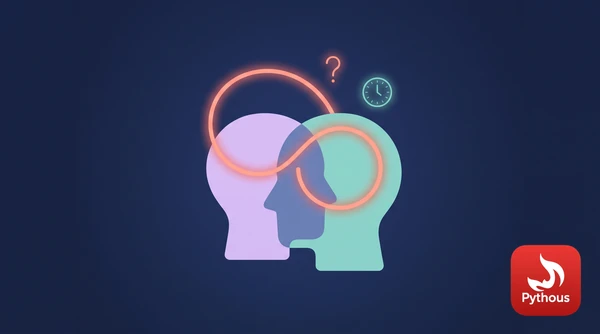
You walk into a room you've never visited and are hit with an overwhelming, specific certainty that you've stood in this exact spot before — same conversation, same light, same everything. It lasts a few seconds and then evaporates, leaving you slightly unsettled. Déjà vu is one of the most common unusual experiences a normal brain produces, and for a long time science had almost nothing rigorous to say about it — mostly because it's nearly impossible to trigger on demand in a lab.
How common is it, actually?
Surveys across multiple studies generally find that somewhere around 60–70% of people report experiencing déjà vu at least once in their life, and it's notably more frequent in younger people, particularly late teens and twenties, becoming rarer with age. It's also reported more often by people who travel frequently and during periods of tiredness or stress — a pattern that turns out to matter for the leading explanations.
It's not evidence of anything supernatural — but it took real neuroscience to show why
For most of history déjà vu had no explanation beyond folk theories — past lives, precognition, glimpses of parallel timelines. What actually shifted the science was studying patients with temporal lobe epilepsy, some of whom experience intense, vivid déjà vu as an "aura" — a warning sensation — immediately before a seizure. Because researchers could observe the exact brain activity occurring during those clinical déjà vu episodes, it became possible to localize the experience to real, specific brain structures rather than treat it as an unexplainable curiosity, primarily regions in and around the temporal lobe involved in memory, especially the hippocampus and rhinal cortex.
Three leading theories
1. Dual-processing / split-perception theory. One long-standing idea is that déjà vu happens when a brief, momentary interruption in attention causes the brain to process the same scene in two nearly simultaneous passes. The first pass registers subconsciously; the second, conscious pass then gets misfiled as a *repeat* of something already experienced, rather than what it actually is — the first full perception of a new scene, split into two.
2. Familiarity without source memory. A more modern account, backed by temporal lobe research, frames déjà vu as a mismatch inside the brain's memory-retrieval system. The brain has two loosely separate jobs when recognizing something: generating a raw "this feels familiar" signal, and separately retrieving the actual source memory that explains *why* it's familiar. Déjà vu, on this account, is what it feels like when the familiarity signal fires strongly — perhaps triggered by a new scene sharing enough structural similarity to a genuine but unretrieved past memory — while the source-memory retrieval comes up completely empty. The result is a pure, unexplained sense of "I've experienced this" with nothing behind it.
3. The brain's memory error-checking system working correctly. A notably different framing, developed through research by cognitive neuroscientist Akira O'Connor and colleagues at the University of St Andrews, proposes that déjà vu might actually be a sign of the memory system's fact-checking process succeeding, not glitching. In this account, frontal brain regions responsible for resolving conflicts periodically audit memory signals for consistency; when the hippocampus generates a false or spurious sense of familiarity, those frontal regions detect the inconsistency and effectively flag it — and that flagging process is what we consciously experience as déjà vu. Under this theory, déjà vu isn't a memory error at all — it's evidence that your brain caught one.
Why it fades with age
If déjà vu is tied to how actively and precisely the brain is cross-checking new experiences against a comparatively smaller, less cluttered store of memories, younger people — with less accumulated life experience to search against and, research suggests, more efficient frontal-lobe error-checking — would be expected to experience it more often. Both leading theories are broadly consistent with the age pattern actually observed, even though they disagree about the underlying mechanism.
Déjà vu's less-famous relatives
- Déjà vécu ("already lived") — a more intense, prolonged version where someone feels they've not just seen a moment before but is convinced they can predict exactly what happens next; when this occurs frequently and severely, it's sometimes associated with certain memory disorders.
- Jamais vu ("never seen") — the mirror opposite: a familiar, well-known place, word, or person suddenly feels completely unfamiliar and alien, even though you know rationally that it shouldn't.
Frequently Asked Questions
Is frequent déjà vu a medical concern? Occasional déjà vu in an otherwise healthy person is considered a normal, harmless experience. Very frequent, prolonged, or unusually intense episodes — especially alongside other symptoms — can occasionally be linked to temporal lobe seizure activity and are worth mentioning to a doctor, though this is a small minority of cases.
Can déjà vu be triggered deliberately? Reliably, no — its unpredictability is exactly why it's been so hard to study. Researchers have had partial success provoking déjà vu-like sensations in lab settings using hypnosis and virtual reality scenarios that closely mimic a previously shown scene, which lends support to the familiarity-mismatch theories.
Does stress or tiredness actually cause it, or is that a myth? It's a genuine, consistently reported correlation, though not fully explained — the leading guess is that fatigue and stress both interfere with attention and memory processing in ways that make the kind of misfire or mismatch described above more likely.


Comments (0)
Leave a Reply
Log in to post a comment.