

 Aug 29, 2026
 13 min read
Who Was Ammar ibn Yasir (RA)? The Life of Islam's Enduring Witness
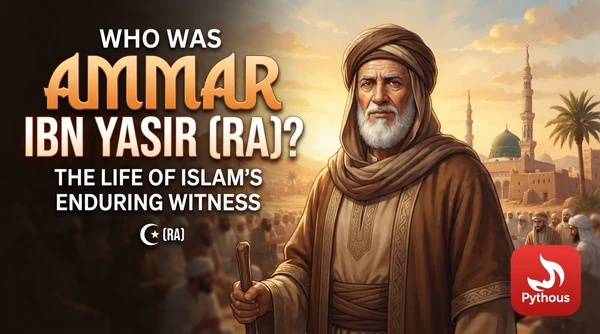
Few lives span the arc of early Islam as completely as that of Ammar ibn Yasir. He was among the first handful of people to accept the message in Mecca, he watched both his parents die under torture for refusing to renounce it, he helped lay the bricks of the Prophet's Mosque in Medina, he governed a garrison city under Umar, and he died with a sword in his hand at the age of ninety-something on the plain of Siffin — in a war between Muslims.
That last fact is why his name carries a weight that few other companions' names do. A prophecy attached to him during his lifetime made his death a piece of evidence, and both sides of the first Muslim civil war knew it.
This article traces his life from Yemen to Mecca to Medina to Kufa to the banks of the Euphrates, following the classical biographical and historical sources: Ibn Ishaq's Sirah (in Ibn Hisham's recension), Ibn Sa'd's Tabaqat al-Kubra, al-Tabari's Tarikh al-Rusul wa'l-Muluk, al-Baladhuri's Ansab al-Ashraf, Ibn al-Athir's Usd al-Ghaba, and Ibn Hajar's al-Isaba, alongside the hadith collections.
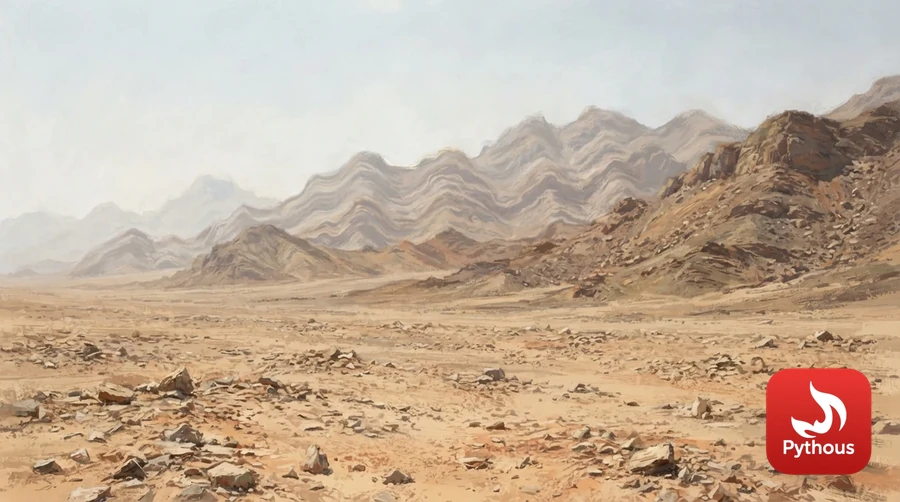
Illustration: the desert around Mecca, where Ammar's family suffered for their faith.
Name, lineage, and origins
His full name is given as Ammar ibn Yasir ibn Amir ibn Malik, of the tribe of Ans, a branch of the great south Arabian confederation of Madhhij. His kunya was Abu al-Yaqzan — "father of the wakeful one."
The family was not Meccan. According to Ibn Sa'd and Ibn al-Athir, Yasir came north from Yemen with two brothers in search of a fourth brother who had gone missing. The brothers eventually returned home; Yasir stayed in Mecca. Having no clan of his own in a city where clan protection was everything, he entered into an alliance (hilf) with Abu Hudhayfa ibn al-Mughira of the Banu Makhzum — one of the most powerful houses in Quraysh.
Abu Hudhayfa gave him in marriage a woman of his household, Sumayya bint Khayyat. Ammar was their son. Sources differ on whether Ammar was born into servitude and later freed, or born free by his patron's grant; either way, the family's standing in Mecca rested entirely on Makhzumi goodwill. When that goodwill evaporated, they had nothing to shield them.
This detail matters. The savagery later directed at the family of Yasir was possible precisely because they were outsiders with a patron rather than insiders with a clan — and the patron's own men were the ones doing the beating.
Among the first to believe
Ammar's conversion belongs to the earliest Meccan period, around 614 CE, when the community still met discreetly at the house of al-Arqam ibn Abi al-Arqam near Safa.
Ibn Ishaq preserves an account in which Ammar and Suhayb ibn Sinan arrived at al-Arqam's door on the same day, each hesitating, each discovering the other had come for the same reason. They went in together and did not come out as they had entered. Ibn Sa'd records Ammar's own estimate that roughly thirty people had preceded him.
A well-known report from Abdullah ibn Mas'ud, recorded by Ibn Majah and others, names seven who first declared their Islam openly rather than in secret: the Prophet, Abu Bakr, Ammar, his mother Sumayya, Suhayb, Bilal, and Miqdad. The Prophet was protected by his uncle Abu Talib; Abu Bakr by his clan. The other five had no such cover.
The sands of Mecca: torture and the first martyr
What followed is among the most frequently retold episodes of the Meccan period, and it is reported with unusual consistency across the sirah literature.
The Banu Makhzum took the family of Yasir out into the open ground at the hottest part of the day and tortured them in the sand — Yasir, Sumayya, and Ammar together. Ibn Ishaq's account has the Prophet passing them in that state and saying:
"Patience, family of Yasir. Your appointed place is Paradise."
Yasir died under the torture. Sumayya was killed by Abu Jahl, who ran her through with a spear when she would not recant. She is remembered in the tradition as the first martyr of Islam — the first person to die for the faith, before any battle, before any migration.
Ammar survived. Under extremity, and after being submerged in water and burned, he was compelled to utter words of disbelief. He came to the Prophet in anguish, and the classical exegetes — al-Tabari among them — connect his case to a verse of Surah al-Nahl:
"…except one who is compelled while his heart is at rest with faith." (Qur'an 16:106)
This became the anchor text for the Islamic legal doctrine of taqiyya in the broad sense of permitted concealment under coercion, discussed by jurists of every school. A man's outward words under torture do not annul what his heart holds. That ruling entered Islamic law through Ammar's ordeal.
Two hadith about him circulate from this period and after, found in Sunan al-Nasa'i, Ibn Majah, and Musnad Ahmad:
- "Ammar has been filled with faith to the marrow of his bones."
- "Whoever bears enmity toward Ammar, God will bear enmity toward him."
Some sources also place him among the emigrants to Abyssinia, though this is disputed and not all biographers include him in the lists.
Medina: the builder and the prophecy
Ammar made the hijra to Medina. Several early reports, including in Ibn Sa'd, credit him with being the first person in Islam to build a mosque — a prayer space in his own dwelling, variously located at Quba or in Mecca before the migration.
But the moment that defined the rest of his life came during the construction of the Prophet's Mosque in Medina.
The companions carried mud bricks. Ammar, older than most of them, carried two loads at a time — his own and another's. Someone remarked on it, or teased him for it. The Prophet brushed the dust from Ammar's head and said words recorded in Sahih al-Bukhari (Book of Prayer, in the chapter on cooperating in building the mosque) and Sahih Muslim (Book of Tribulations), and in Musnad Ahmad:
"Alas, Ibn Sumayya — a transgressing party (al-fi'a al-baghiya) will kill you. You will be calling them to Paradise, and they will be calling you to the Fire."
At the time it meant little. Forty-odd years later it would be quoted on a battlefield by men trying to work out which side of a Muslim civil war they were standing on.
The campaigns
Ammar's military record covers essentially the whole span of the Prophet's expeditions. He is listed among the participants at:
- Badr (2 AH / 624 CE)
- Uhud (3 AH / 625 CE)
- The Trench / Khandaq (5 AH / 627 CE)
- The Pledge of Ridwan at Hudaybiyya (6 AH / 628 CE)
- and the subsequent campaigns through to the end of the Prophet's life
After the Prophet's death he fought in the Ridda wars under Abu Bakr. At the Battle of Yamama against Musaylima (11–12 AH), where Muslim losses were heavy and the line briefly broke, Ammar climbed onto a rock and shouted the men back into formation. He lost an ear in the fighting. Ibn Sa'd notes that he continued to fight afterward without pausing over the wound.
Governor of Kufa under Umar
Around 21 AH (641–642 CE), the caliph Umar ibn al-Khattab appointed Ammar governor of Kufa, the new garrison city on the Euphrates, sending Abdullah ibn Mas'ud with him to handle the treasury and teach. Al-Tabari preserves the text of Umar's letter to the Kufans, which introduces the two men as being among the noblest of the Prophet's companions and men of Badr, and instructs the city to listen to them.
The appointment did not last long — roughly a year and a half. Complaints reached Medina. The Kufans, a famously ungovernable population, found Ammar insufficiently political: scrupulous, austere, uninterested in the arts of administration.
Umar removed him. The exchange that followed, reported in Ibn Sa'd and al-Tabari, is one of the more revealing anecdotes about Ammar's character. Umar asked whether the dismissal had grieved him. Ammar replied that neither the appointment had pleased him nor the dismissal had grieved him. Umar was careful to state publicly that he had not removed him for any failing of integrity or any betrayal of trust.
Under Uthman: the widening rift
The caliphate of Uthman ibn Affan (23–35 AH / 644–656 CE) turned Ammar from an elder statesman into an opposition figure.
He became one of the more outspoken critics of the administration in Medina — of the appointment of the caliph's kinsmen to key provinces, and of the handling of the public treasury. Al-Baladhuri's Ansab al-Ashraf and al-Tabari report an incident in which Ammar objected to the disbursement of treasury goods and was severely beaten, sustaining an internal rupture that troubled him afterward. He is also named among those who carried a written statement of grievances from a group of senior companions to the caliph.
A word of caution is needed here. The narratives of the late Uthmanic period reach us through early historians writing in the shadow of the conflict itself, and they carry visible partisan pressure in both directions. Sunni and Shia historiography read this material very differently, and modern scholars — from Wilferd Madelung to Hugh Kennedy — differ on how much of the detail can be relied upon. What is not in dispute is that Ammar was, by the end, firmly among the critics.
The First Fitna: the Camel and Siffin
After Uthman's killing in 35 AH, Ammar aligned himself unhesitatingly with Ali ibn Abi Talib. He was among Ali's envoys to Kufa, sent with al-Hasan to bring the city into the caliph's camp before the Battle of the Camel (36 AH / 656 CE), where he fought on Ali's side.
The following year came Siffin (Safar 37 AH / July 657 CE), the confrontation with Mu'awiya ibn Abi Sufyan on the upper Euphrates.
Ammar was by now somewhere in his nineties — the sources give 91, 93, or 94. He fought anyway, and more than that: his presence functioned as an argument. For many in Ali's army, and for waverers in the other, the sight of one of the last surviving men of Badr and one of the earliest believers standing on this side of the field settled the question of legitimacy.
He was killed at Siffin. The sources name his killer as Abu al-Ghadiyah al-Juhani.
"A transgressing party will kill you"
The reaction in Mu'awiya's camp is one of the most striking passages in the historiography of the civil war, preserved in al-Tabari, in Nasr ibn Muzahim's Waq'at Siffin, and in Ibn al-Athir.
The prophecy was common knowledge. Everyone present had heard it. If the transgressing party was the one that killed Ammar, then Mu'awiya's army had just publicly identified itself.
Al-Tabari reports the disquiet spreading through the Syrian ranks and the answer devised to contain it: Mu'awiya argued that Ammar had been killed by the people who brought him out to the battlefield — that is, by Ali's own camp. Ali's reply, reported in the same sources, cut the argument down: in that case the Prophet killed Hamza at Uhud, since it was he who brought him out.
Amr ibn al-As, Mu'awiya's chief strategist, is depicted in several accounts as visibly disturbed by the news. Whatever their reliability in detail, these narratives record something historically real: a single death forced an entire army to construct a public justification for its own position, and the debate over it did not end with the battle.
The last cup of milk
Musnad Ahmad and al-Hakim's Mustadrak preserve a report from the day itself. Ammar asked for a drink and was brought milk. He drank it and said that the Prophet had told him his last provision in this world would be a draught of milk — and then, in the version most often quoted:
"Today I meet the beloved ones — Muhammad and his company."
Ali is reported to have prayed over him and buried him in his clothes, unwashed, in the manner of a martyr, on the field at Siffin near Raqqa in what is now northern Syria. A shrine complex marked the site for centuries. It was destroyed during the Syrian civil war.
What his life meant
Three things secure Ammar ibn Yasir's place in Islamic history, and they are worth separating.
First, as a witness under persecution. The family of Yasir is the tradition's foundational account of what it cost to believe before there was any community strong enough to protect believers. Sumayya's death gives Islam its first martyr; Ammar's forced words give Islamic law its ruling on coercion.
Second, as a moral test case. A prophecy uttered casually over a mud brick became, four decades later, a criterion. His death at Siffin is cited across Sunni and Shia scholarship alike — in the Sunni tradition largely as evidence that Ali's side held the stronger claim in the conflict, while the Shia tradition reads it as a decisive confirmation of Ali's authority. That both traditions engage the same hadith, and that Mu'awiya's camp had to answer it at the time, is itself the measure of its weight.
Third, as a model of consistency. Ammar accepted no distinction between the man he was at thirty in the sands of Mecca and the man he was at ninety on the Euphrates. He carried double loads of brick, he took a governorship without pleasure and lost it without complaint, and he ended by choosing a side in a war he could easily have sat out on grounds of age.
Timeline
| DateEvent | |
| c. 566–570 CE | Born in Mecca to Yasir and Sumayya |
| c. 614 CE | Accepts Islam at the house of al-Arqam |
| c. 615 CE | Torture of the family of Yasir; Yasir dies; Sumayya killed by Abu Jahl |
| 622 CE / 1 AH | Migration to Medina; construction of the Prophet's Mosque |
| 624–628 CE | Badr, Uhud, Khandaq, Pledge of Ridwan |
| 632–633 CE / 11–12 AH | Battle of Yamama; loses an ear |
| c. 642 CE / 21 AH | Appointed governor of Kufa by Umar |
| c. 644 CE | Removed from the governorship |
| 656 CE / 36 AH | Battle of the Camel, on Ali's side |
| 657 CE / 37 AH | Killed at the Battle of Siffin, aged c. 91–94 |
Primary and classical sources
- Ibn Hisham, al-Sirah al-Nabawiyya (recension of Ibn Ishaq) — the Meccan persecution narratives
- Ibn Sa'd, Kitab al-Tabaqat al-Kabir — biography, lineage, Kufa governorship
- al-Tabari, Tarikh al-Rusul wa'l-Muluk — Umar's letter to Kufa; Siffin and its aftermath
- al-Baladhuri, Ansab al-Ashraf — the Uthmanic period
- Nasr ibn Muzahim, Waq'at Siffin — the battle narrative
- Ibn al-Athir, Usd al-Ghaba fi Ma'rifat al-Sahaba
- Ibn Hajar al-Asqalani, al-Isaba fi Tamyiz al-Sahaba
- Sahih al-Bukhari (Book of Prayer) and Sahih Muslim (Book of Tribulations) — the fi'a baghiya hadith
- Musnad Ahmad, Sunan al-Nasa'i, Sunan Ibn Majah, al-Hakim, al-Mustadrak
Modern scholarship
- Wilferd Madelung, The Succession to Muhammad: A Study of the Early Caliphate
- Hugh Kennedy, The Prophet and the Age of the Caliphates
- Fred M. Donner, Muhammad and the Believers



Comments (0)
Leave a Reply
Log in to post a comment.