

 Jul 06, 2026
 5 min read
Understanding Diabetes: Beyond the Sugar Myth
Understanding Diabetes: Beyond the Sugar Myth
Imagine your body as a busy city, with each cell acting like a home that needs energy to function.
The main fuel for these homes is glucose, a simple sugar that comes from the food you eat.
However, glucose can't just enter a cell on its own—it needs a specific key to unlock the door. That key is a hormone called insulin, which is made by your pancreas.
When someone has diabetes, something goes wrong with this key.
Either the body stops creating insulin entirely, or the cells become resistant to it, like locks that won't open.
As a result, glucose builds up in the blood, leaving the cells without energy while the blood vessels become overloaded with sugar.
The Tale of Two Types (And a Few Others)
Diabetes isn't a single condition—it has different forms, each with its own characteristics.
Type 1 Diabetes: The Faulty Factory
Type 1 diabetes is an autoimmune disease.
For reasons still not fully understood, the body's immune system mistakenly attacks and destroys the insulin-producing cells in the pancreas.
- What Happens: The body is no longer able to make insulin.
- How It's Managed: People with Type 1 diabetes must receive insulin through injections or an insulin pump.
It often starts in childhood or early adulthood, though it can develop at any age.
Type 2 Diabetes: The Rusted Locks
Type 2 diabetes is the most common form, making up about 90% to 95% of all cases globally.
In this case, the pancreas still produces insulin, but the body's cells stop responding to it, like locks that are rusted and won't open.
- What Happens: Over time, the pancreas tries to make more and more insulin, eventually leading to a decline in production.
- How It's Managed: Although linked to genetics, weight, and lifestyle, Type 2 diabetes can often be managed through lifestyle changes, oral medications, or insulin.
Gestational Diabetes & Prediabetes
- Gestational Diabetes: This occurs during pregnancy when hormones from the placenta interfere with the mother's insulin, making it less effective. It usually goes away after childbirth but increases the risk of developing Type 2 diabetes for both the mother and child.
- Prediabetes: This is a stage where blood sugar levels are higher than normal but not yet high enough to be classified as Type 2. It is a critical opportunity for taking preventive action.
The Red Flags: Spotting the Signs
Because glucose can't get into the cells, the body tries to remove the excess through urine, triggering a series of symptoms.
1. Polyuria (Excessive Urination):
The kidneys work harder to filter and eliminate extra glucose, drawing water from tissues as it does so.
2. Polydipsia (Extreme Thirst):
As the body loses water through frequent urination, severe dehydration occurs, causing intense thirst.
3. Polyphagia (Constant Hunger):
The cells aren't getting the glucose they need, so the brain signals that the body is hungry, even after eating.
4. Unexplained Weight Loss:
When cells can't use glucose, the body starts burning fat and muscle for energy, resulting in weight loss, especially in Type 1 diabetes.
5. Fatigue and Blurred Vision:
High blood sugar can pull fluid from the eye lenses, causing blurry vision, and low cellular energy leads to tiredness.
6. Slow-healing cuts and wounds:
High blood sugar damages blood vessels and reduces blood flow, making it harder for oxygen and nutrients to reach wounds. It also weakens the immune system, slowing the body's ability to fight infection. As a result, cuts and wounds heal more slowly and are more likely to become infected.
Some people with Type 2 diabetes may have no obvious symptoms until complications develop.
The Long-Term Impact: Why It Demands Attention
Keeping blood sugar levels consistently high is like pouring thick syrup into delicate machinery.
Over time, this sticky glucose damages blood vessels and nerves throughout the body, leading to serious health complications.
Here are Affected System and their Potential Long-Term Complications;
1. Cardiovascular: Increased risk of heart attacks, strokes, and atherosclerosis (narrowed arteries).
2. Nervous (Neuropathy): Nerve damage, most often starting with tingling or numbness in the feet.
3. Renal (Nephropathy): Damage to the kidney's filtering system, possibly leading to kidney failure.
4. Ocular (Retinopathy): Damage to the blood vessels in the retina, which is a leading cause of blindness.
Causes and Risk Factors
Several factors can increase the risk of developing diabetes.
Risk factors for Type 1 Diabetes
- Family history
- Autoimmune disorders
- Certain viral infections
- Genetic susceptibility
Risk factors for Type 2 Diabetes
- Overweight or obesity
- Physical inactivity
- Unhealthy diet
- Family history of diabetes
- High blood pressure
- High cholesterol
- Smoking
- Age over 45 years
- Polycystic ovary syndrome (PCOS)
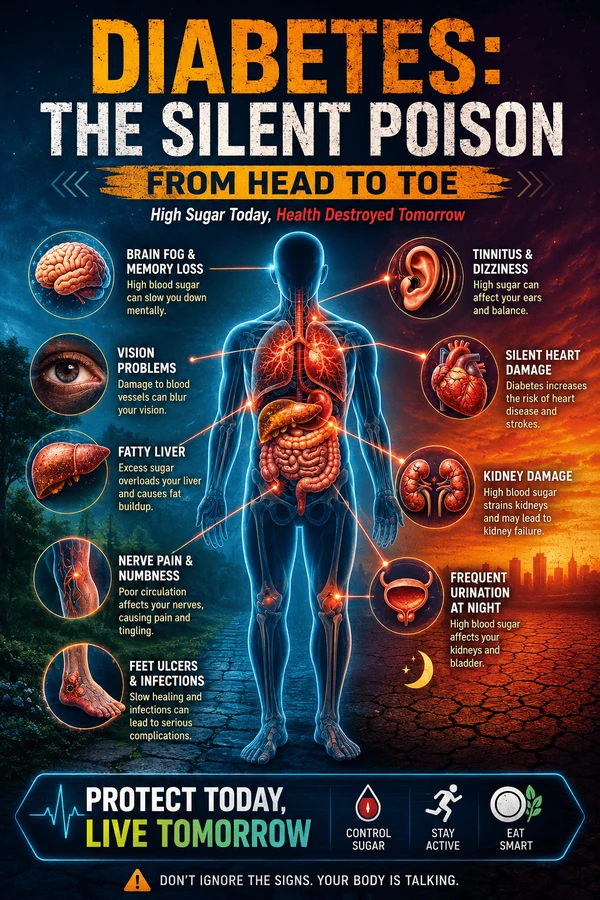
How Diabetes Affects the Body
Persistently high blood sugar can damage blood vessels and nerves throughout the body, leading to serious complications.
Brain
High blood sugar may contribute to memory problems, difficulty concentrating, and an increased risk of stroke and cognitive decline.
Eyes
Diabetes can damage the tiny blood vessels in the retina, leading to diabetic retinopathy, blurred vision, cataracts, glaucoma, and even blindness if left untreated.
Heart
People with diabetes are at a much higher risk of heart disease, heart attack, and stroke because elevated blood sugar damages blood vessels and promotes plaque buildup.
Kidneys
The kidneys filter waste from the blood.
Diabetes can gradually damage these filters, leading to diabetic kidney disease and, in severe cases, kidney failure.
Nerves
Nerve damage, known as diabetic neuropathy, can cause numbness, tingling, burning sensations, or severe pain, especially in the feet and legs.
Liver
Type 2 diabetes is closely linked with fatty liver disease, which can progress to liver inflammation and scarring over time.
Feet
Poor circulation and nerve damage increase the risk of foot ulcers, infections, and slow wound healing.
In severe cases, untreated infections may require amputation.
How Is Diabetes Diagnosed?
Doctors use several blood tests to diagnose diabetes, including:
- Fasting blood glucose test
- HbA1c (glycated hemoglobin) test
- Oral glucose tolerance test
- Random blood sugar test
Regular screening is especially important for people with risk factors or a family history of diabetes.
Rewriting the Script: Management and Prevention
A diabetes diagnosis used to mean a slow decline in health.
Today, with modern medicine and nutritional science, the story is much different.
- For Type 1 diabetes, technology like continuous glucose monitors (CGMs) and smart insulin pumps helps manage the condition more effectively.
- For Type 2 diabetes and prediabetes, lifestyle changes are the most powerful treatment.
> The Power of Small Changes: A major study, the Diabetes Prevention Program (DPP), showed that losing just 5% to 7% of body weight through healthy eating and 150 minutes of moderate exercise per week can lower the risk of developing Type 2 diabetes by up to 58%.
A diet rich in complex carbohydrates—like fiber-rich vegetables, legumes, and whole grains—helps avoid sharp blood sugar spikes.
Combining this with resistance training or brisk walking can help muscles directly absorb glucose from the blood, even without relying heavily on insulin.Diabetes is a complex condition, but with the right tools, education, and support, people can live full, active, and healthy lives.




Comments (0)
Leave a Reply
Log in to post a comment.